Connect SAP, Dynamics 365, and NetSuite shipper ERPs to your WMS and carrier APIs. Onboard new clients without rebuilding the integration for each additional win.
Warehouse management and shipper ERP reflect the same numbers across all client accounts.
Reusable “capsules” apply to every new ERP connection without rebuilding core logic.
Use AI to convert PDFs and emails into clean data.
“If you’re not using Digibee to solve these types of problems, then you’re just overspending on your engineering effort.”


Connect major ERPs to WMS for bidirectional inventory updates across client accounts.
Route ecommerce orders into WMS and return shipment confirmation automatically.
Consolidate tracking events from multiple carriers through a single layer.
Trigger RMA creation, receiving, inventory updates, and ERP posting from returns events.
Connect historical data to labor planning; AI predicts volume spikes for staffing optimization.
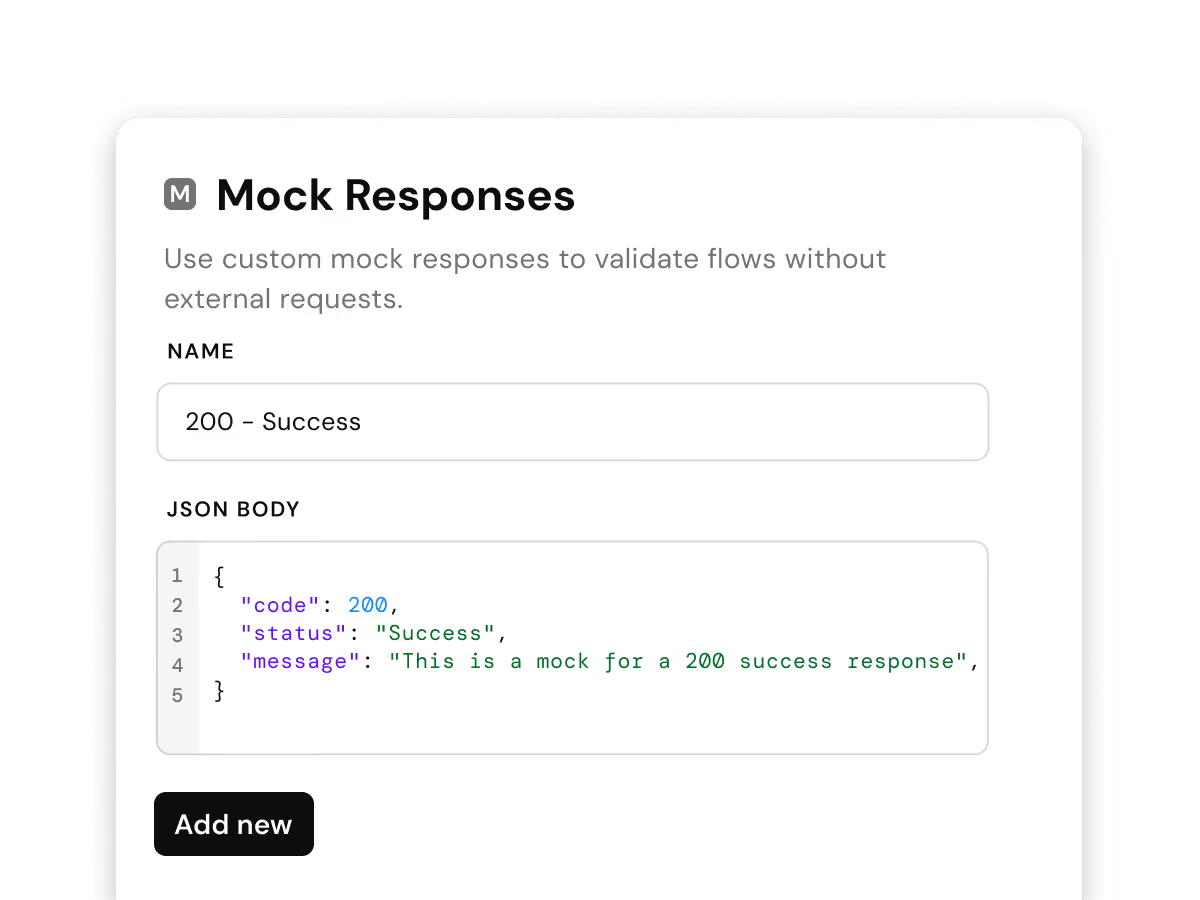
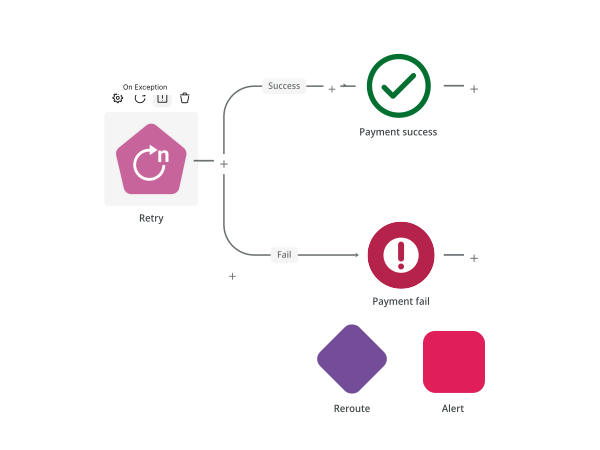
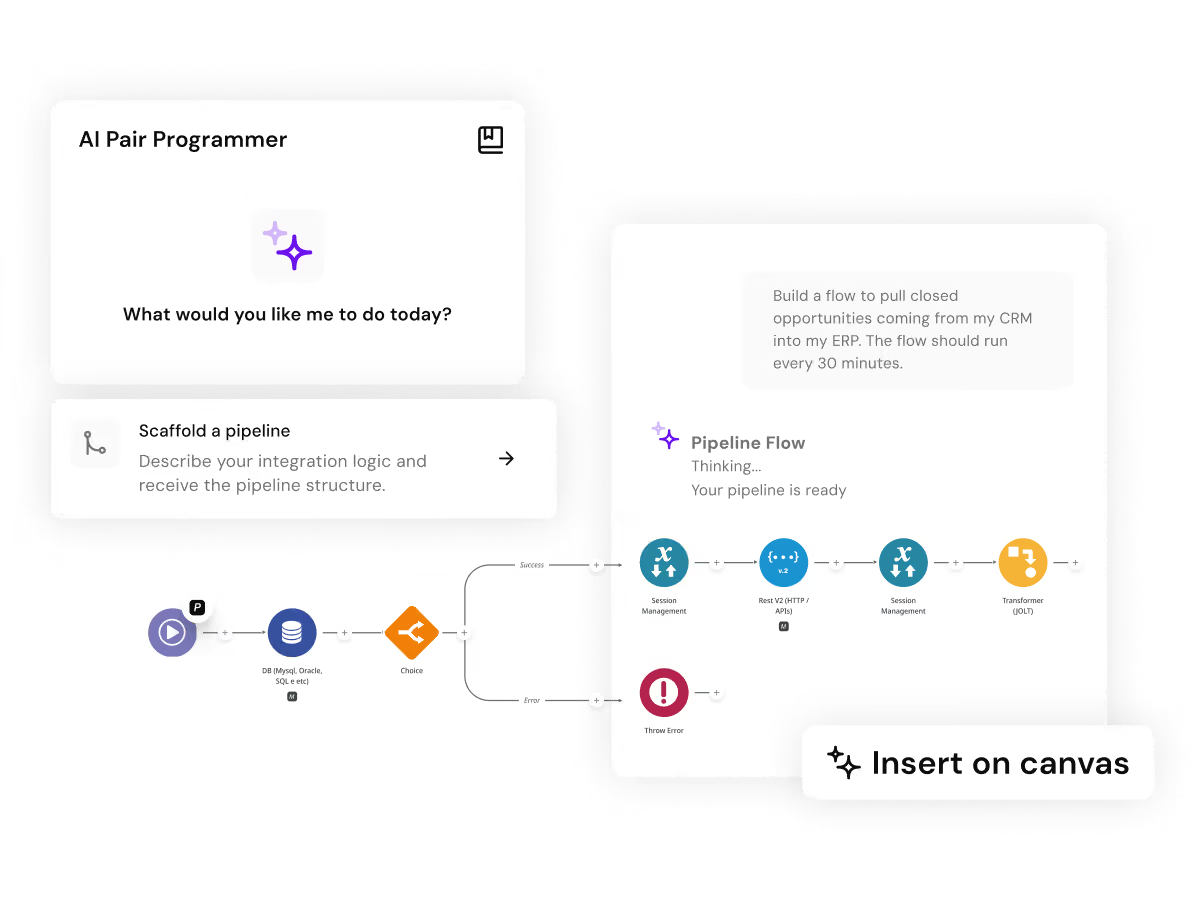
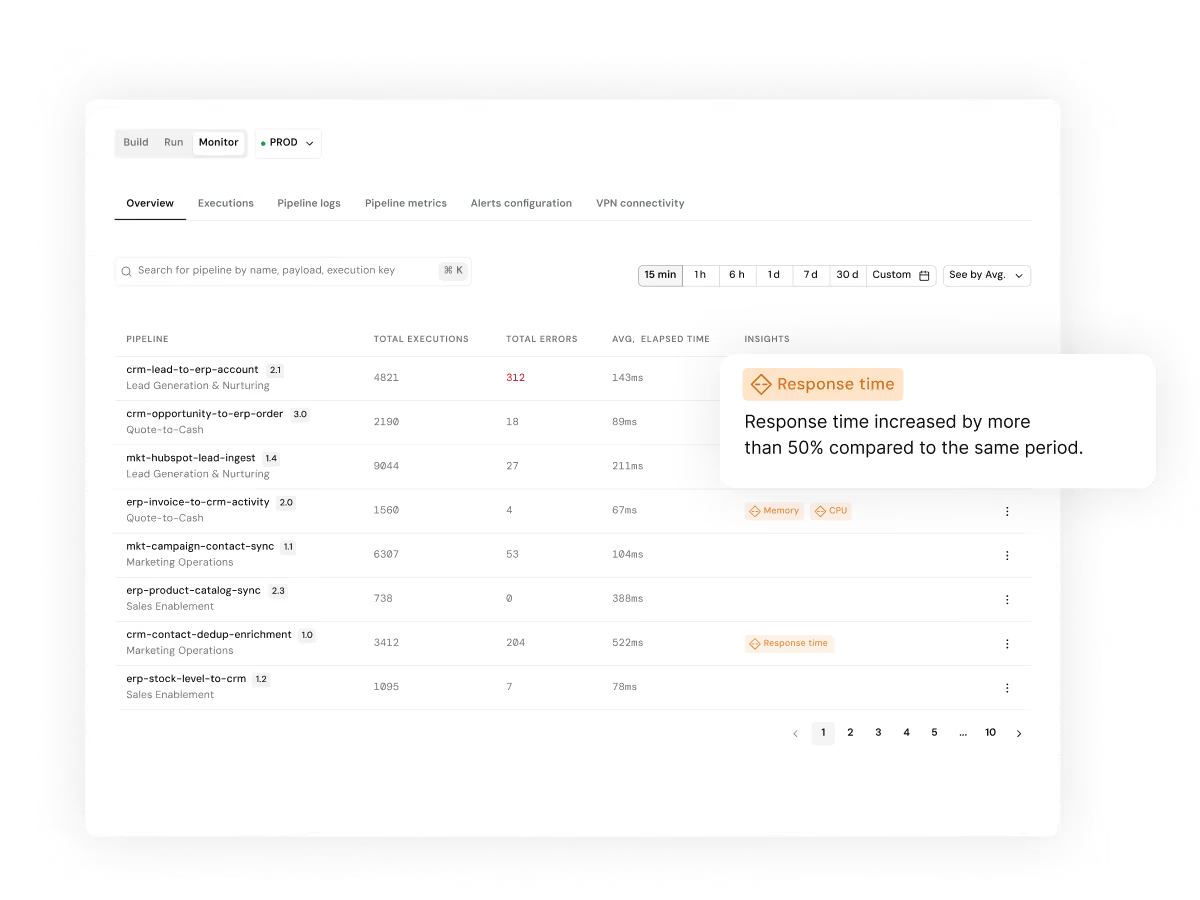
With fail-safe workflows, unified agent development, and managed updates, you can focus on what you’re building.
Simple, consumption-based pricing just like your cloud provider. No complicated add-ons.
AI acceleration combined with a flexible, low-code developer experience and seamless deployment.
With reusable ERP capsules, onboarding a new shipper is mostly configuration, not a rebuild. A typical new-client ERP connection (SAP, Dynamics 365, NetSuite) goes live in days to a few weeks — you map the new account onto an existing capsule instead of writing a fresh point-to-point integration each time.
Five criteria matter most: support for the ERP types your shippers actually run (SAP, Dynamics 365, NetSuite, Oracle); reusable onboarding templates that apply across successive client connections without rebuilding core logic; an on-premises connectivity model for enterprise shippers with strict firewall policies; a pricing model that stays predictable as client count and transaction volume grow; and monitoring that detects integration failures before they breach SLAs. Run a proof-of-concept against your highest-volume shipper integration before committing.
Two models exist. The first requires the shipper’s IT team to open inbound firewall ports, which triggers a security review that can add weeks to onboarding. The second uses an agent installed inside the shipper’s network that initiates an outbound-only connection to the cloud platform, requiring no inbound firewall changes on the shipper’s side. The agent-based model aligns with Zero Trust Network Access (ZTNA) principles and removes the security exception process entirely. Digibee ZTNA uses this outbound-only model.
Common models include per-message or per-transaction fees, per-vCore pricing, and per-connector licensing. For 3PLs managing 15–30+ shipper integrations with 3–10x seasonal volume swings, per-connector models compound cost exposure at peak and as the client portfolio grows. Digibee’s usage-based pricing covers every connector and every developer seat. Adding shippers does not change the contract.
Modern carrier APIs — FedEx, UPS, DHL, regional LTL carriers — each use different authentication schemes, response schemas, and event models. A flexible REST connector with configurable polling intervals, retry logic, and header management handles that variability without carrier-specific custom code.
Three metrics. One dashboard. No surprises.
Release notes and updates from the Digibee team.
One platform to handle day-one connectivity, dual-ERP coexistence, and consolidation without rebuilding.