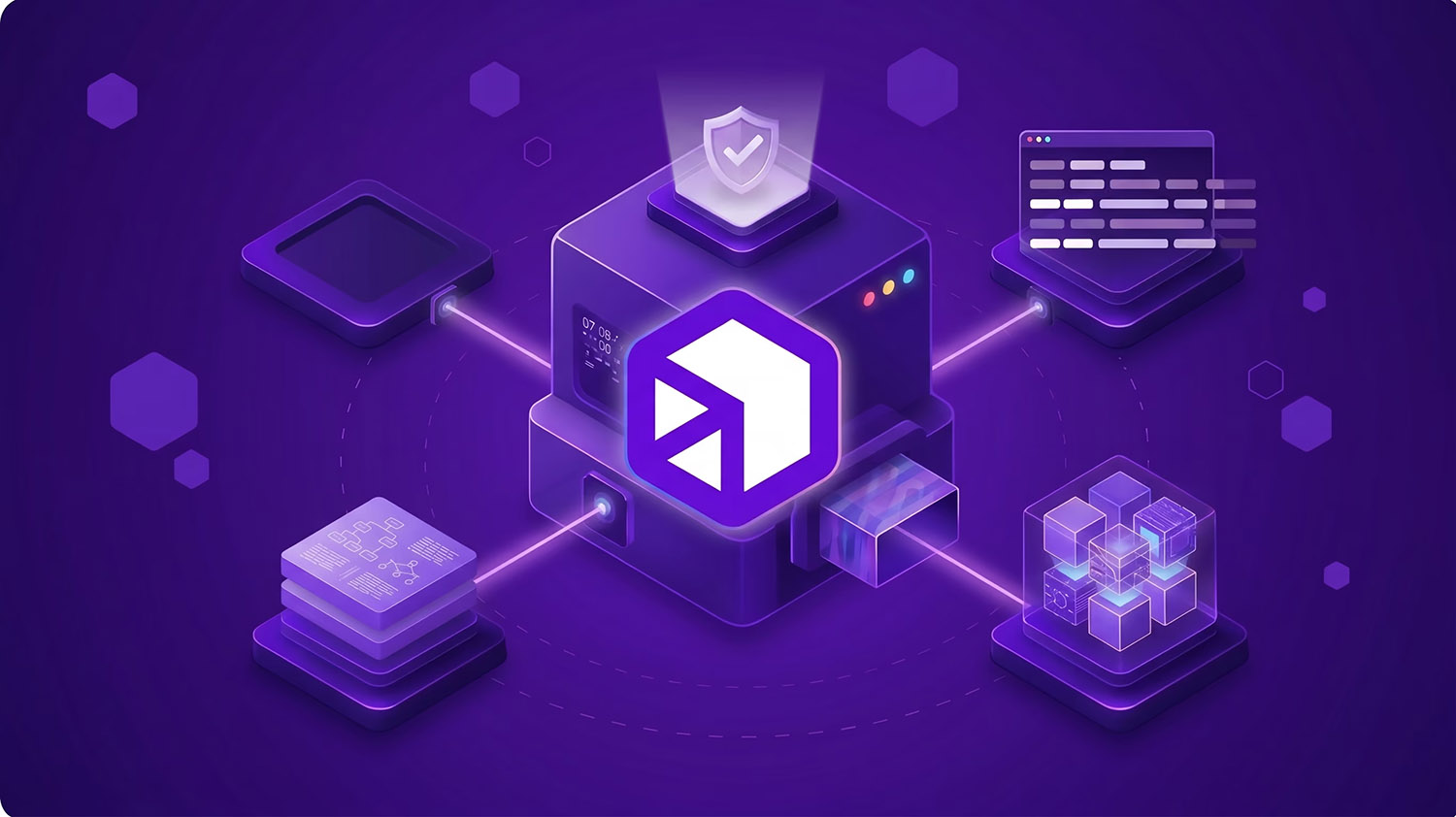
Systems integration works through a layer that connects applications, databases, and platforms so they can exchange information in an automated, secure, and consistent way. In practice, it eliminates manual transfers, reduces errors, and improves operational fluidity between areas and channels. In corporate environments, the real value lies not only in the technical connection but also in the ability to support governance, observability, and predictable architectural evolution.
What is systems integration in practice?
Systems integration is the process of connecting software, databases, and platforms so that they work together. The base text presents exactly this definition by showing that, without integration, areas operate in isolation, while with integration, data begins to circulate automatically between systems.
In practice, this means replacing manual workflows with structured information exchanges. A sales order can update inventory, finances, and customer service without needing to copy data between screens. An event in one system can trigger actions in another. The result is a more coordinated operation that is less dependent on human intervention in repetitive steps.
This point is important because integration is not just a technical convenience. It is a direct response to the operational fragmentation that grows as the company adopts more digital applications and channels.
Why is systems integration so important?
The submitted content highlights benefits such as process automation, error reduction, improved decision-making, increased agility, and a better customer experience. These gains help explain why integration has become a priority in digital operations.
When systems don't connect, the company relies on manual tasks, time-consuming reconciliations, and parallel controls. This increases rework, reduces productivity, and compromises the quality of information. When integration is well-structured, data flows more consistently, improving both execution and strategic business analysis.
In an enterprise context, this point is even more critical. The more distributed the technological environment, the greater the need for an integration foundation that supports continuity without increasing technical debt.
How does systems integration work?
The base text shows four recurring models: point-to-point integration, integration via middleware, integration via APIs, and integration via service bus, such as ESB. Each approach addresses a different level of complexity and architectural maturity.
In practice, the operation is based on a simple principle: a system sends data or events, an integration layer interprets this content, applies rules when necessary, and forwards the information to the correct destination. This can happen in real time or in defined cycles, depending on the criticality of the flow.
The crucial point is that integration is not just about exchanging data. In corporate environments, it needs to support format transformation, process orchestration, fault handling, security, and operational visibility. This is what differentiates a functional connection from an integration truly ready for production.
Important points
- Systems integration connects applications, databases, and platforms.
- The goal is to automate data exchange and reduce reliance on manual tasks.
- APIs, middleware, peer-to-peer, and ESB are among the most common models.
- The gains go beyond automation and include data quality, productivity, and operational visibility.
- In corporate contexts, integration needs to operate with security, governance, and observability.
- The real value appears when integration is seamlessly integrated into the company's architecture.
What tools and technologies are typically used?
The source material cites tools such as Zapier, MuleSoft, Dell Boomi, Microsoft Power Automate, and Apache Camel. These examples demonstrate that there are simpler, more visual, and more robust approaches for diverse corporate scenarios.
In practice, the choice of technology depends on the type of workflow, the number of systems involved, the level of customization required, and the criticality of the operation. Some solutions accelerate point integrations. Others help build a broader layer of enterprise integration.
At Digibee, this point is addressed with a focus on architecture. The chosen technology needs to support connectivity, but also reuse, monitoring, production protection, and operational evolution over time.
What challenges need to be addressed from the outset?
The text highlights challenges such as compatibility between old and new systems, data exchange security, technical complexity, and the need for continuous maintenance. These factors are crucial because integration doesn't end when the workflow goes into production.
In an enterprise context, the main risk isn't just getting the connection to work. The greater risk is failing to build a foundation capable of handling changes, increased volume, failures, and new architectural demands. Without this, the company may integrate quickly in the short term, but accumulate operational fragility in the medium term.
Read more
What is system integration?
It is the process of connecting software, databases, and platforms so that they can exchange information in an automated and structured way.
How does integration improve productivity?
It eliminates manual tasks and reduces rework, allowing teams to focus on more strategic activities.
Are APIs the only way to integrate systems?
No. The source text also mentions middleware, point-to-point integration, and ESB as possible approaches.
Is it possible to integrate legacy systems with new technologies?
Yes. In many cases this requires adaptations or the use of intermediate layers, but it's a common practice.
Is the integration secure?
It's possible, provided the company uses good encryption, authentication, and access control practices.
Should small businesses also invest in integration?
Yes. The core content shows that simple integrations can already generate significant gains in agility and error reduction.
Because understanding how integration works is understanding the foundation of digital operations.
Understanding how systems integration works means understanding how a company organizes its operations to function more coherently in an increasingly distributed technological environment. The base text demonstrates this by associating integration with automation, error reduction, improved customer experience, and support for digital transformation. These gains are real, but in an enterprise context, they need to be understood on a broader level.
At Digibee, integration isn't just about connectivity. It's a strategic capability of the enterprise architecture. The challenge isn't just about making systems exchange data. It's about ensuring that this communication happens securely, with observability, governance, and the ability to evolve without increasing operational disorder. When integration is improvised, the company accumulates silos, rework, and low predictability. When integration is well-structured, the company creates a more coordinated foundation to modernize, grow, and operate with greater confidence.
This point is crucial because the modern enterprise relies on multiple applications, channels, and data coexisting simultaneously. Without a mature integration layer, each new flow increases complexity. With the right approach, integration connects the present of operations to the future of the architecture with much greater clarity and control.
That's why systems integration is no longer just a technical topic. It has become a structural necessity for companies that want to grow consistently.