Connect FIS, Finastra, or Jack Henry to Salesforce Financial Services Cloud, and your fraud detection stack. Keep the systems that run your bank.
Audit trails, access controls, and data privacy run in every pipeline.
Integration teams ship from first build to live deployment in two months.
Turn siloed core data into clean, structured streams for AI.
“The platform’s simplicity and low-code/no-code approach make it accessible beyond technical teams, empowering business areas to participate in building and managing integrations.”


Connect FIS, Jack Henry, or Finastra to modern systems without modifying legacy code.
Process every transaction via event-driven pipelines with no polling delays.
Route live transaction signals to AI risk engines the moment a flag is raised.
Pull real-time credit histories and behavioral data to feed automated underwriting decisioning.
Sync core banking, CRM, and loyalty data bidirectionally to build a complete customer view.
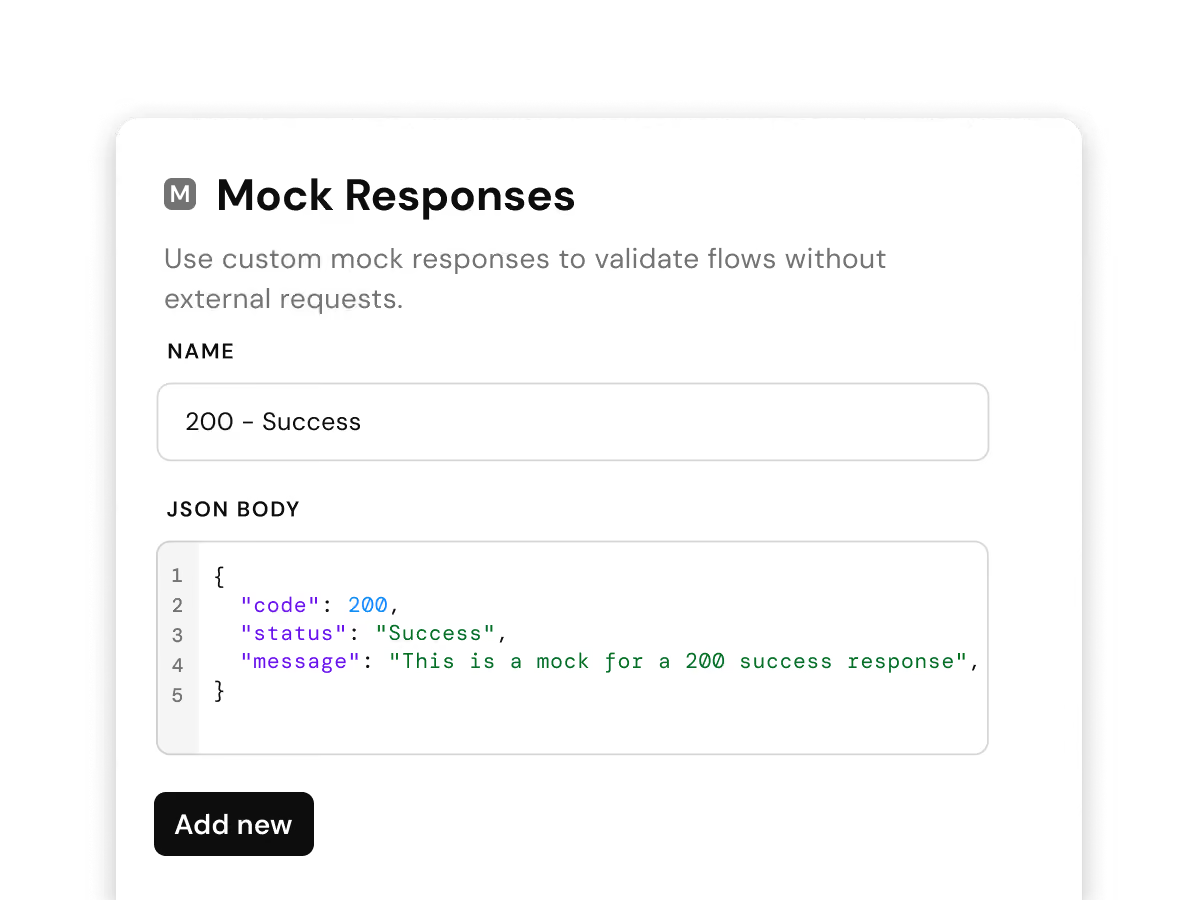
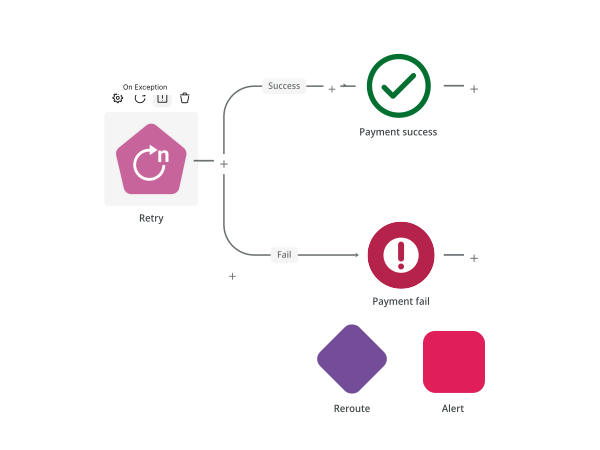
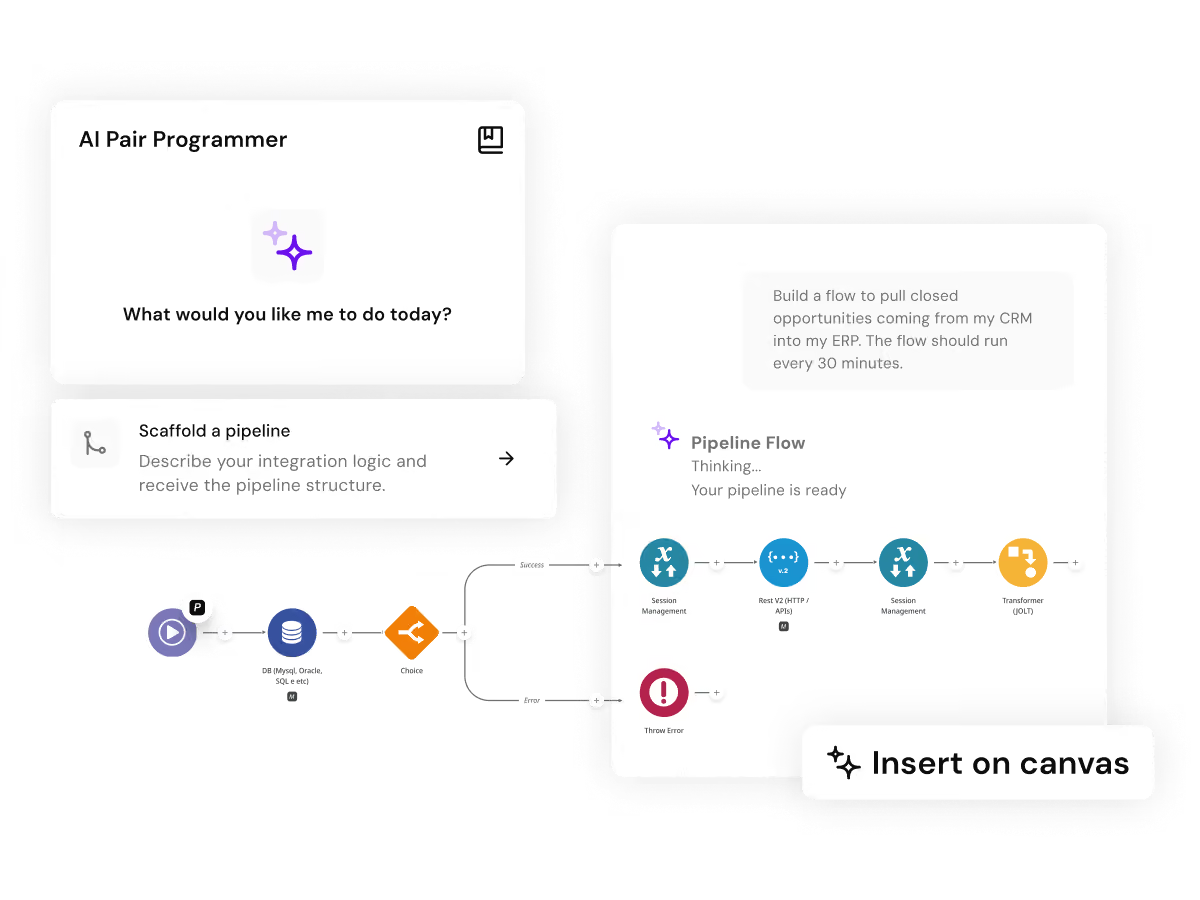
With fail-safe workflows, unified agent development, and managed updates, you can focus on what you’re building.
Simple, consumption-based pricing just like your cloud provider. No complicated add-ons.
AI acceleration combined with a flexible, low-code developer experience and seamless deployment.
Core banking integration timelines can vary significantly. A well-defined integration between a core banking platform such as FIS, Jack Henry, or Finastra and a modern application typically takes between 4 and 12 weeks, depending on factors such as system complexity, data transformation requirements, and the use of legacy protocols. As an example, a tier-1 Brazilian bank successfully deployed a Digibee integration into production in just 52 days.
Modern architecture treats the core as the engine and the integration platform as the nervous system. Core engines (e.g., FIS, Jack Henry) are built for the “heavy lifting” of ledgers and transactions. Native integrations “hard-wire” external tools directly to the engine, creating a rigid monolith. A single vendor update can cause a total system stall. By using an integration platform as a decoupled “nervous system,” the complexity of translation, security, and workflow orchestration moves away from the core. This eases the process of adding or changing components, such as a KYC provider or loan LOS.
Open Finance (Brazil), CFPB 1033 (US), and PSD2 (EU) all require banks to expose customer financial data through secure, governed APIs. The integration layer handles data movement: pulling data from core systems, applying PII controls, and routing it to API endpoints in compliant formats. A separate API management layer handles external exposure governance — authentication, rate limiting, consent enforcement, and audit. Integration platforms that support both layers, or that connect cleanly to a dedicated API management platform, reduce the architectural complexity of meeting these requirements without rebuilding core systems.
To prepare legacy systems for the era of artificial intelligence, the bank must evolve from a passive processing infrastructure to an ecosystem of live, semantically enriched data. The biggest hurdle for “Banking AI” isn’t the model itself—it’s the data format. Legacy cores typically produce records in rigid, non-standardized formats (such as COBOL or flat files) that LLMs and machine learning systems cannot consume efficiently. The solution lies in an intelligent integration layer that acts as a real-time transformer, cleaning and “hydrating” raw data into structured, vectorized streams. This transformation creates an “AI-ready” data layer capable of powering RAG (Retrieval-Augmented Generation) architectures, allowing large language models to access precise transactional contexts and updated policies the moment they occur, eliminating the latency of nightly batch processing and enabling personalized responses or fraud detection in milliseconds.
Modern integration replaces the “perimeter” firewall with a Zero Trust architecture, using the integration platform as a secure air-gap. This ensures third-party apps never interact directly with the raw core database. Instead, the integration layer acts as a real-time gatekeeper. It automates PII masking, scrubbing sensitive data before it leaves the internal environment. It also converts legacy internal traffic into encrypted standards like TLS 1.3 and OAuth 2.0. Meanwhile, it creates immutable audit logs for every data call to satisfy regulatory requirements automatically. This approach enables API innovation without compromising the integrity of the underlying ledger.
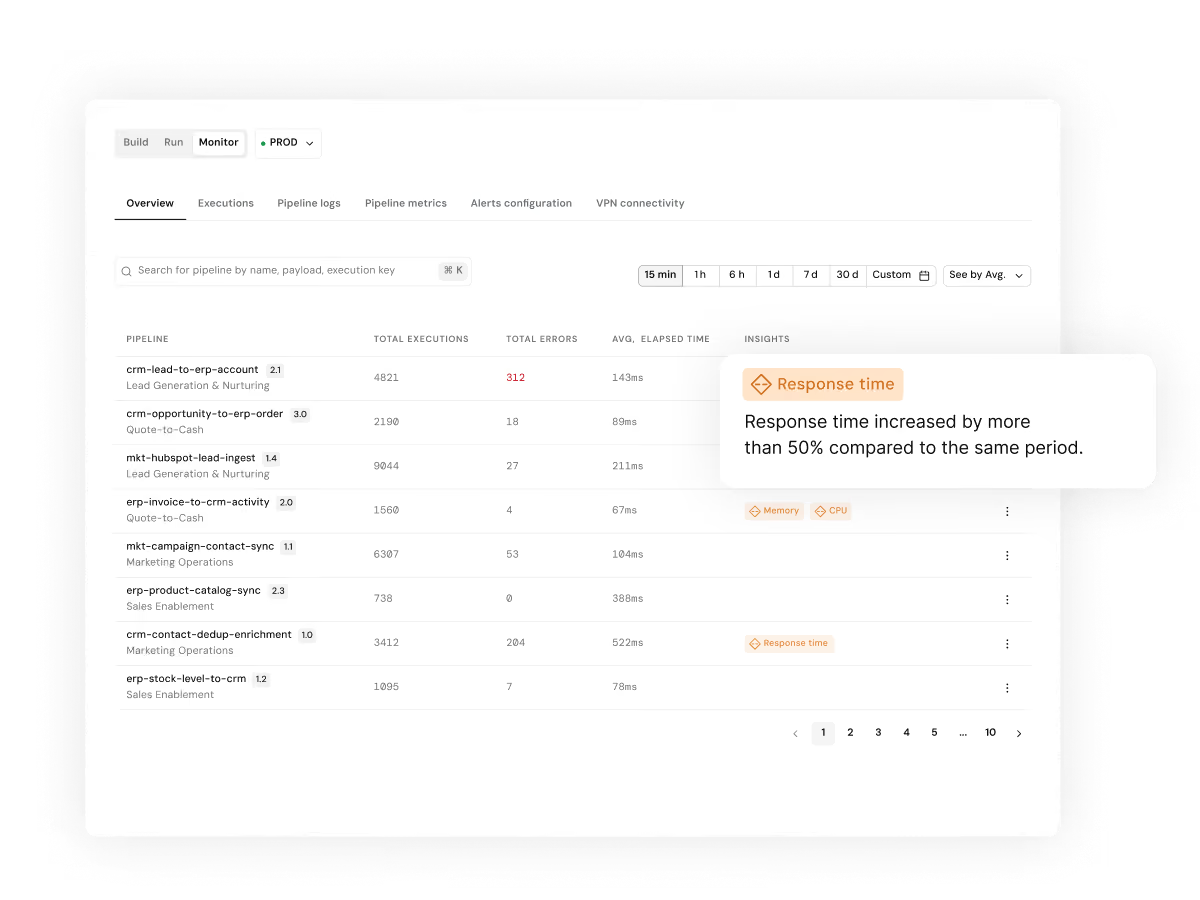
Three metrics. One dashboard. No surprises.
Release notes and updates from the Digibee team.
Outbound-only HTTPS. No firewall changes. Connected to the mainframe on day one.