In 2023, Digibee held our second Company State Integration Survey, reaching 1,000 CTOs, CIOs, system architects, and web developers across North America.
In this series, we examine the key findings uncovered in the report, including the number one goal organizations have when implementing enterprise integration: cloud migration.
Why is cloud migration so important?
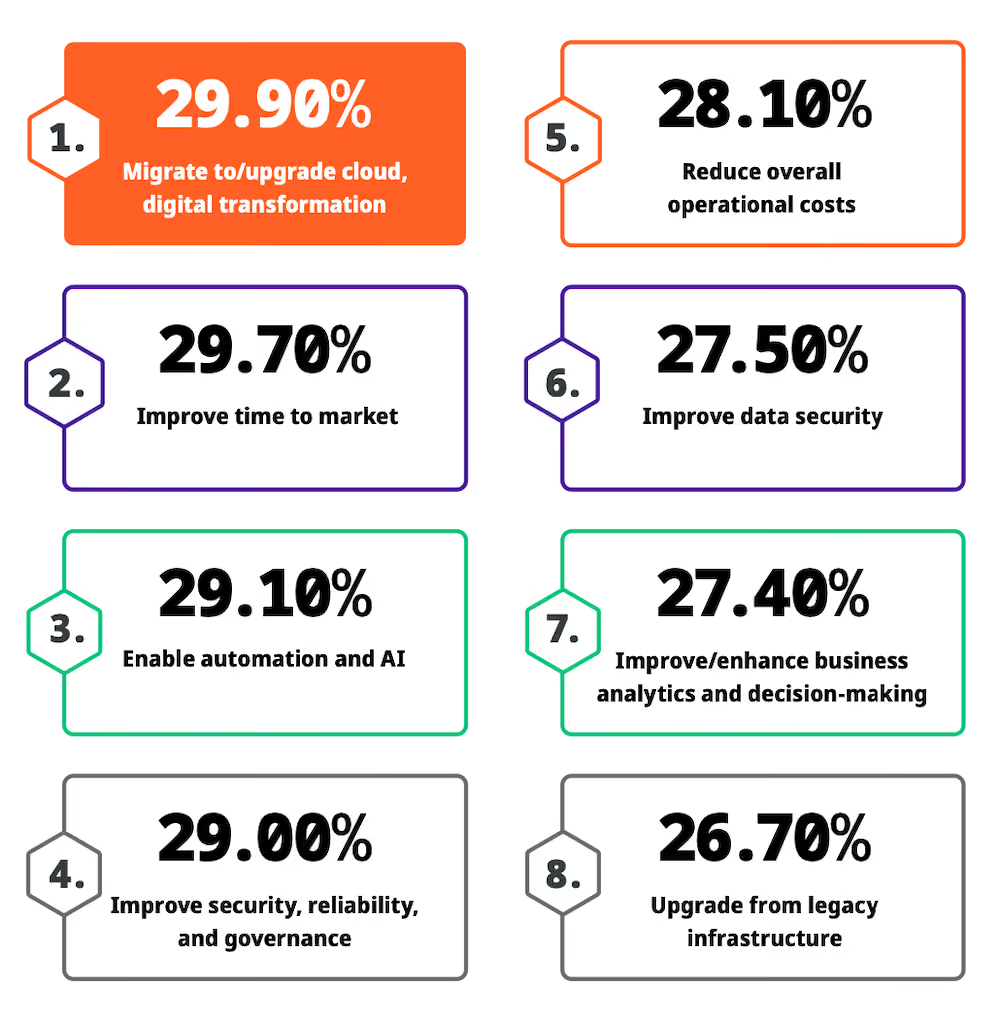
Survey respondents identify eight priorities. While the ranking is relatively uniform, Migrate to/Upgrade to the Cloud, digital transformation is in the top spot.
So why do so many business and technology leaders prioritize cloud migration as the most important goal of enterprise integration?
The cloud market is expanding at an incredible pace. By 2022, the market size is estimated to reach $480.04 billion. In the US alone, the public cloud market is projected to reach $206.1 billion by the end of 2022.
Once a successful cloud migration is achieved, organizations can scale quickly and respond immediately to market changes. Additionally, new tools and technologies can be easily implemented to accelerate business growth and profitability.
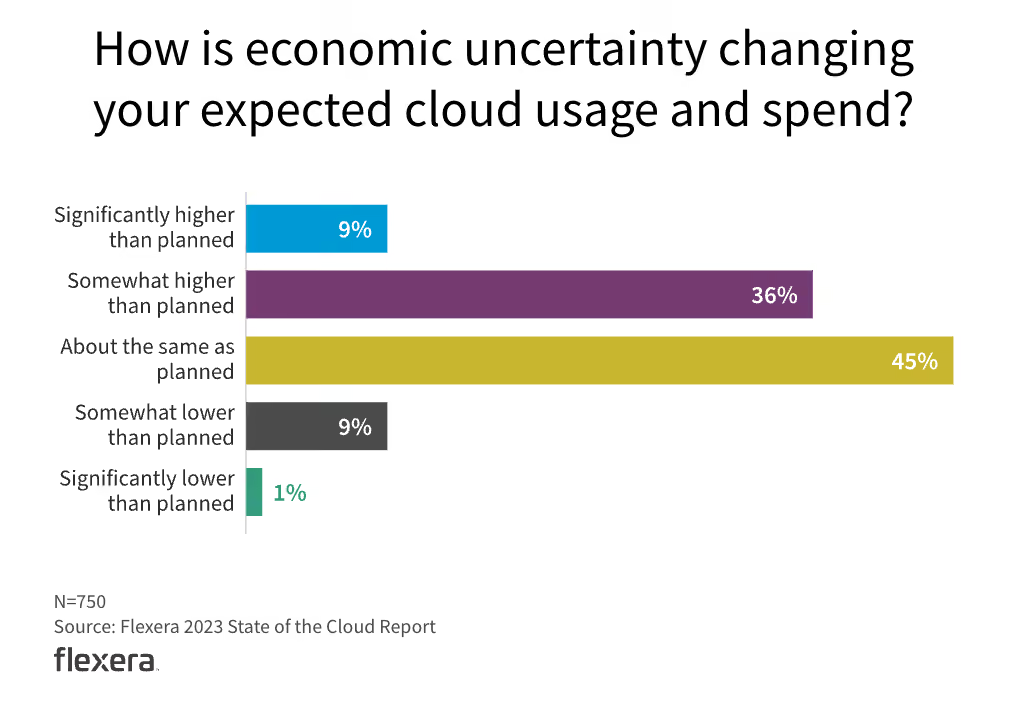
Today, the cloud is ubiquitous, with most companies exceeding usage and spending estimates once implemented.
Cloud storage and security
The cloud is an equalizer
The cloud levels the playing field by providing security and storage capabilities beyond the reach (and budget) of most businesses. Any business, whether a startup or an established one, can easily leverage capabilities at the scale of an Amazon Web Services, Google Cloud Platform, or Microsoft Azure simply by hosting their infrastructure on those platforms.
"The rise of cloud systems… has convinced many companies, large and small, that hosting their data in the cloud is more cost-effective, secure and convenient than maintaining an on-premises IT infrastructure."
The cloud scales easily. For example, as you implement your cloud migration strategy, your environment becomes more digital, generating increasing amounts of data from connected devices and systems.
Securing and implementing a cloud data management strategy becomes challenging if your infrastructure is unable to handle the load.
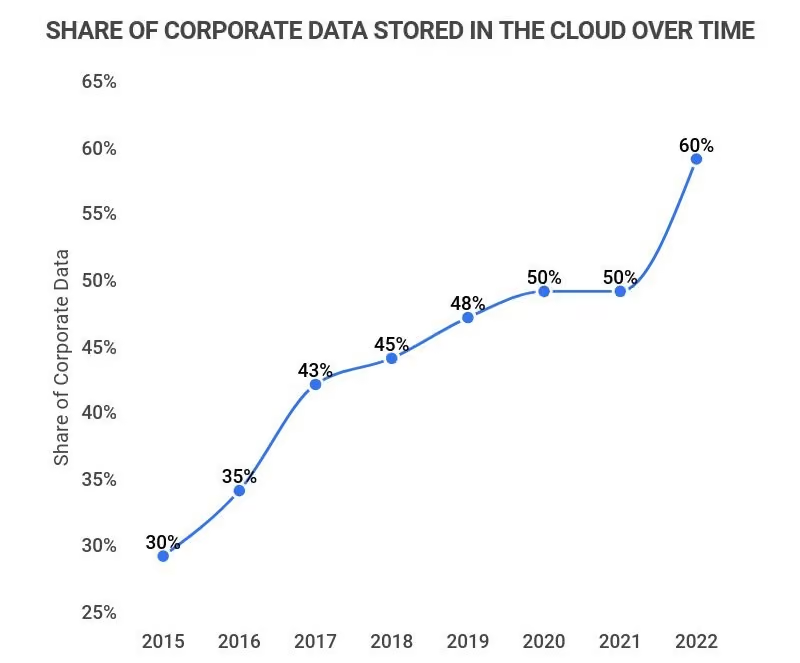
The cloud, with its incredible storage capabilities, offers scalable and secure data storage. The steep trajectory of corporate data stored in the cloud over time reflects this growing trend.
The most common type of cloud migration is rehosting, where a company migrates on-premises applications to a private or public cloud.
Rarely will a company re-host (or lift and shift) its entire IT ecosystem at once. Instead, the company creates a cloud migration strategy that incorporates a phased approach, determining which systems to migrate first and which systems will remain on-premises. In certain scenarios, for example to comply with government and industry regulations, some systems will always be hosted on-premises.
Other common types of cloud migration include:
Restructuring: During migration, an application is redesigned to work better in a cloud environment.
New platform: Legacy systems are modified to work optimally in the cloud without rewriting the core architecture.
Regardless of the model, the result is a hybrid environment where applications and platforms must remain connected, whether they are hosted on-premises or in the cloud.
Overcoming Cloud Migration Challenges with Digibee iPaaS
With so many opportunities, it's no surprise that more than 70% of leaders researched are actively planning to adopt, supplement or replace your integration technology in 2023.
Digibee's unique cloud-native integration platform streamlines the migration process, minimizing disruptions and ensuring a smooth transition, while overcoming common challenges including:
Performance and continuity within the cloud environment
Costs management for continuous control of cloud costs and waste
Governance to control provisioning, infrastructure delivery and overall operation
Operations management to optimize efficiency and safety
Observability through internal and external data to improve resource performance and uptime
Security in on-premises environments and cloud-based systems
Enterprise integration is essential to achieving important digital transformation initiatives that modernize and ensure the success of your business. Without it, migrating to the cloud is difficult and often impossible.
Rodrigo cofounded Digibee based on the principles of simplicity, agility and strong human connections — with the goal of freeing less technically savvy customers from their reliance on developers for more rapid, cost-effective digital transformations. After receiving a Bachelor in Computer Science and an MBA, Rodrigo went on to senior roles at CA Technologies and Zup Innovation.
RECOMMENDED POSTS
Systems & API Integration
Is the truth in your code or your spec?
Is the source of truth held in the code, or in the specification? Why "vibe coding" falls short for enterprise infrastructure and why durable specifications are essential.
How to solve the main systems integration problems in the healthcare sector
Integrating healthcare systems goes beyond connecting tools. It is about creating a functional ecosystem that allows the flow of information between different platforms and facilitates data-driven decision-making.
Developers now prompt AI tools to build for them. Software companies have built MCP servers that let you work on their platforms straight from an AI chat interface. There’s a better way: starting from a specification.
Is the source of truth held in the code, or in the specification? Why "vibe coding" falls short for enterprise infrastructure and why durable specifications are essential.