Developers now spend their days prompting AI tools like Claude Code to build for them. Software companies have responded by building Model Context Protocol (MCP) servers that let you work on their platforms straight from an AI chat interface.
This democratizes many complex SaaS products that previously required application-specific expertise. Now, you can use plain language to ask for what you need, without knowing where to click or the particulars of data labels.
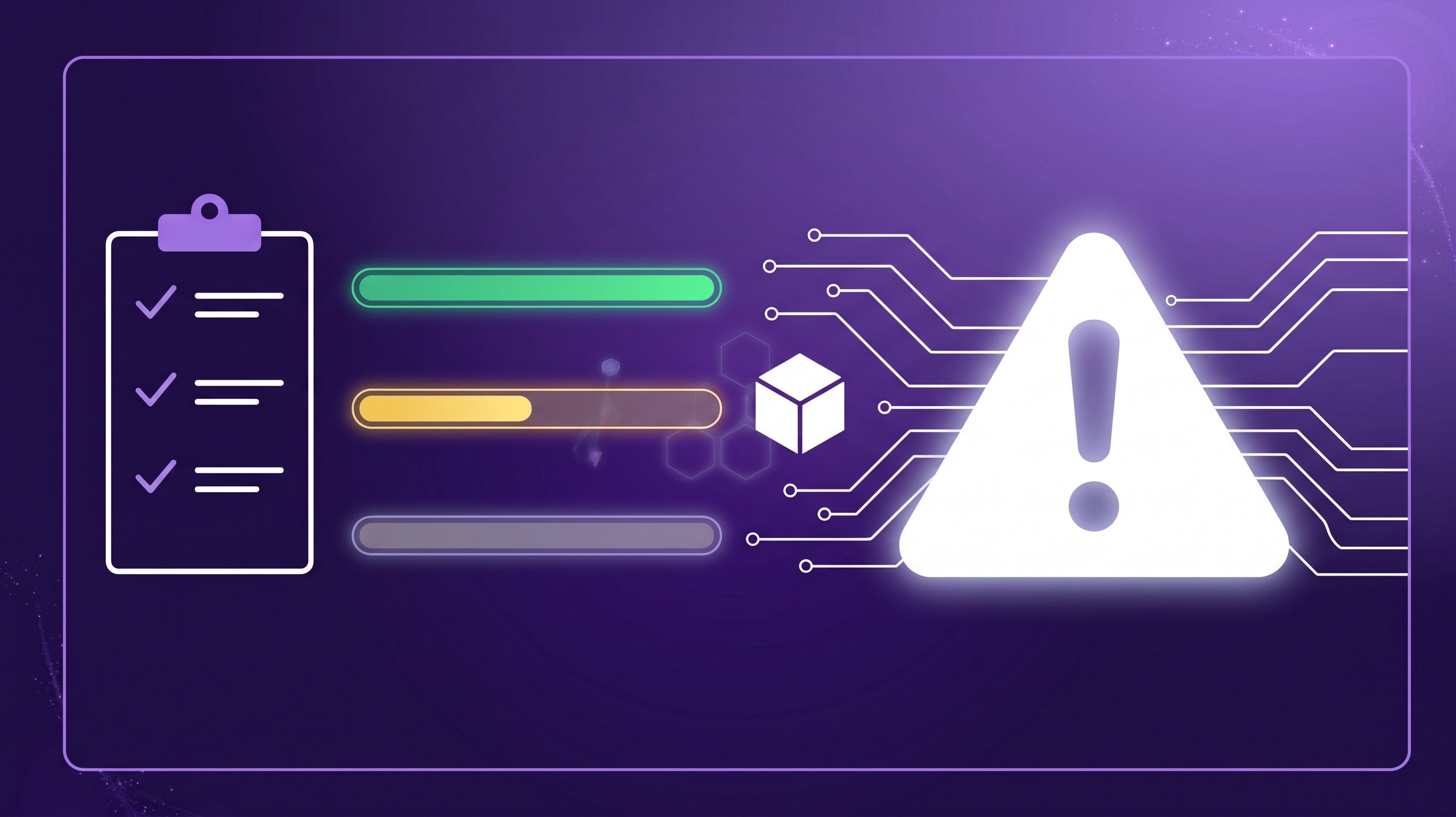
Many of these interactions follow a pattern that we call “Prompt, Plan, Build.” This approach looks and feels intuitive, but it creates material risk. You provide your goal as a prompt. LLMs try to give you a plan that matches what you asked for. They rarely push back, even if what you asked for doesn’t make sense. Then, as is human nature, you skim the plan,approve without real scrutiny, and let the LLM build.
There’s a better way: starting from a specification. This detailed document reasons through purpose, constraints and edge cases forces the scrutiny to happen before a plan ever exists.
What is “Prompt, Plan, Build?”
“Prompt, Plan, Build” works like this: through an AI coding tool, a user describes what they want to achieve—connecting Salesforce to SAP, for instance. The AI accesses platform resources through an MCP and returns a plan. Once you approve the plan, the agent uses the plan to build what you asked for.
Problem 1: The skim
Humans often default to “good enough.” After several items conform to expectations, a reviewer’s brain hits cruise control. They stop reading for errors and start reading for reasons to stop. The fourth time you get a confirmation message from Claude, do you actually read it?
This isn't new to AI. A manager skims a junior analyst's report before a 4 pm meeting and approves it because the numbers look right. Herbert Simon described this in the 1950s as “satisficing.” People take the first adequate option because searching for the optimal one costs more.
When Claude Code and a platform’s MCP tools return a plan that “looks right,” it’s easy to approve it and move on—often without even reading it. In a video demo for an automation platform, the presenter said some of his builds failed after he read a plan summary and missed key details.
The consequences for this behavior range from annoying to catastrophic. A build may fail and require you to revise the plan. A build could also succeed, but do something subtle and incorrect that you won’t notice until it’s been deployed for months. Or you could find out you’ve just blown up your data model in a core enterprise system.
Problem 2: The plan reflects the ask, not the need
High-quality technical planning should be slightly adversarial. When a development team huddles at the whiteboard, one of the most important questions is “have you considered X?”
Large language models want to please users and rarely push back. When a user asks for a plan to sync payroll records to a publicly-available Google Doc, they will get a plan to do just that. The model won’t ask you why or whether they have considered the consequences.
The LLMs will always bias to the fastest possible solution, not the best. Users don't know what they haven't considered. Prompt, Plan, Build never asks.
What a specification does differently
What most LLMs call a plan describes what happens as seen from the ground. It declares that step two will deliver documents in batches of five with a half-second wait between each.
A specification operates from above. It captures why the project is being built in the first place. It surfaces trade-offs and rationale for decisions. It documents why the team needs a given piece of technical infrastructure, and what constraints it has to operate under. For example, the destination system can handle up to 1,000 documents per second, but known critical workflows deliver 900-950 documents per second during maximum load. To maximize reliability, the team recommends no more than 10 documents transferred per second.
Why we started with the spec
We took a different approach with our Digibee Digital Workers (DDWs). These are AI we’ve deeply specialized in integration who act as seasoned members of your team.
Leaving aside our extensive engineering work, in Digibee, working in Digital Worker Mode differs from Prompt, Plan, Build in two primary ways:
- DDWs live on our platform, not in an AI coding tool. They have direct access to all the same capabilities you do as a user.
- Every new project starts with—and lives by—the spec.
When you kick off a new project, you describe your goal in business terms and provide any relevant context. This could include system documentation, reference APIs, or transcripts from meetings with business stakeholders.
Once that’s provided, a new, dedicated digital worker is spun up and immediately does two things: It starts building the spec and it starts asking strategic questions. What’s the top priority? Speed? Reliability? Coverage? What edge-cases have you considered? The digital worker presents trade-offs and recommendations. You decide while you watch the specification being written, adjusted, and enhanced in real time. This interaction is made possible by our on-platform interface.
Through this process, the digital worker proposes workflow design options for feedback and approval. Customers tell us this design and discovery work commonly takes weeks. With the digital worker, it’s commonly complete in well under an hour.
This process also makes users reflect on whether what they asked for matches what they need. One customer said that the digital worker proposed an edge case that he hadn’t considered and could have derailed his integration.
This dialogue continues until you deem the spec ready. Then you hand off the integration build to the digital worker. It uses the spec as the source of truth, holding itself to the decisions and implementation details agreed upon.
The current trend calls this “spec-driven development.” We were working on it before that label became trendy because it’s the right approach for disciplines that require rigor.
When you review the integration in the canvas view, you know what's expected and can evaluate it quickly.
Why the spec matters six months later
Freshly deployed software doesn’t stay running forever. It breaks. If that’s day one, the person who built that code is still nearby and knows how to fix it.
Six months later presents a different story. You probably won’t be able to find the Claude session where you built your plan. If you can, you’ll probably struggle to understand your own prompt. Why did you want it to build this way? Were you observing constraints? Or was it an arbitrary choice?
That’s if it’s your own prompt. The original architect may be on vacation (or have moved on entirely). In that case, the prompt and all traces of the original thought process have also departed.
A specification ends that pain. It charts out the purpose and constraints. It reflects organizational patterns and standards. It explains all the choices. If the original plan had a gap in logic, it will be apparent.
As a bonus, any time an update is recommended or a fix is needed, Digibee Digital Workers propose the change via the Spec for human approval. This creates up-to-date, accurate documentation through the life of your integrations.
Why this matters beyond one product
The upsides of building with a specification compound as your team builds additional code. So do the downsides of Prompt, Plan, Build.
AI assistants can read existing specifications and build the next feature to follow choices and logic that already worked. Without this, features or workflows serving similar purposes may not resemble each other. Logging and error handling may diverge, making examination of their production performance difficult to compare—or even holistically understand.
In contrast, the Digibee Digital Worker approach applies your best developer’s instincts to elevate the entire team’s work. One clever choice or rock-solid piece of reasoning in a spec resurfaces as source material in each subsequent integration.
Some platforms’ MCP tools retrieve previous builds as examples. But examples don’t explain reasoning. An earlier process may have built around a specific, narrow complication. Mirroring that pattern may be counter-productive.
Developers can adopt better hygiene with Prompt, Plan, Build. They can train themselves to interrogate the plan and archive prompts—or even entire chat logs. But it’s a burden of DIY change management and invites lazy habits. Even the most vigilant hygiene won’t create a specification from this approach, leaving challenges down the road.
The approach we’ve chosen feels slower at first. That’s a good thing; people make mistakes when they think too quickly. Bob Vila famously said “any job worth doing is worth doing right,” which is an apt slogan for enterprise integrations. The small additional time spent building a specification instead of a plan will more than pay for itself when the maintenance bill comes due.
[Get early access to the first AI-native integration platform →]