Core financial processes cannot handle the probabilistic reality of LLMs. By structural and regulatory necessity, they must be deterministic. But AI still has a place in financial services.
While data must move from place to place without variation, AI can examine that data to help firms solve problems faster. The deterministic workflow produces structured output. The AI produces meaning.
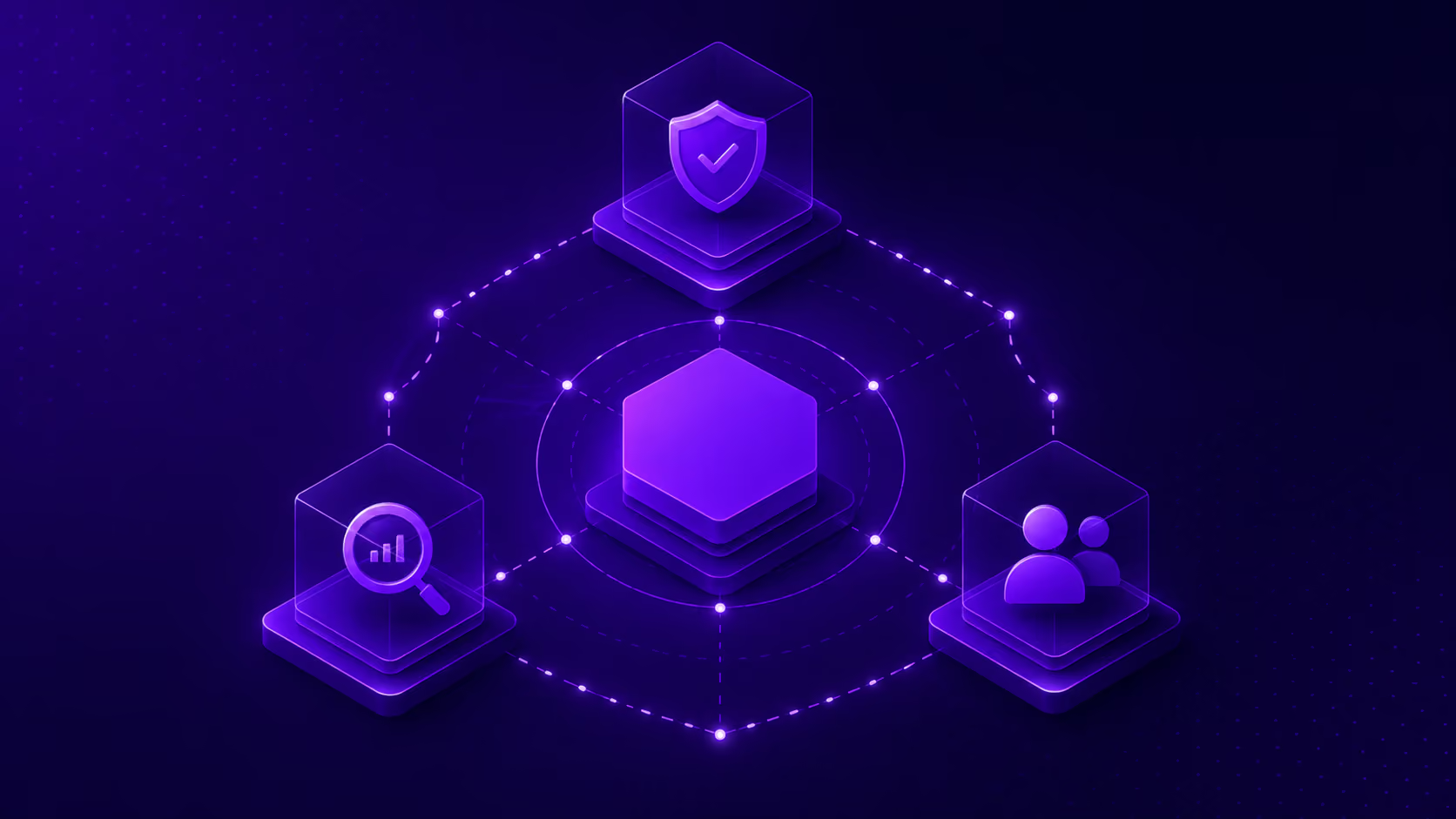
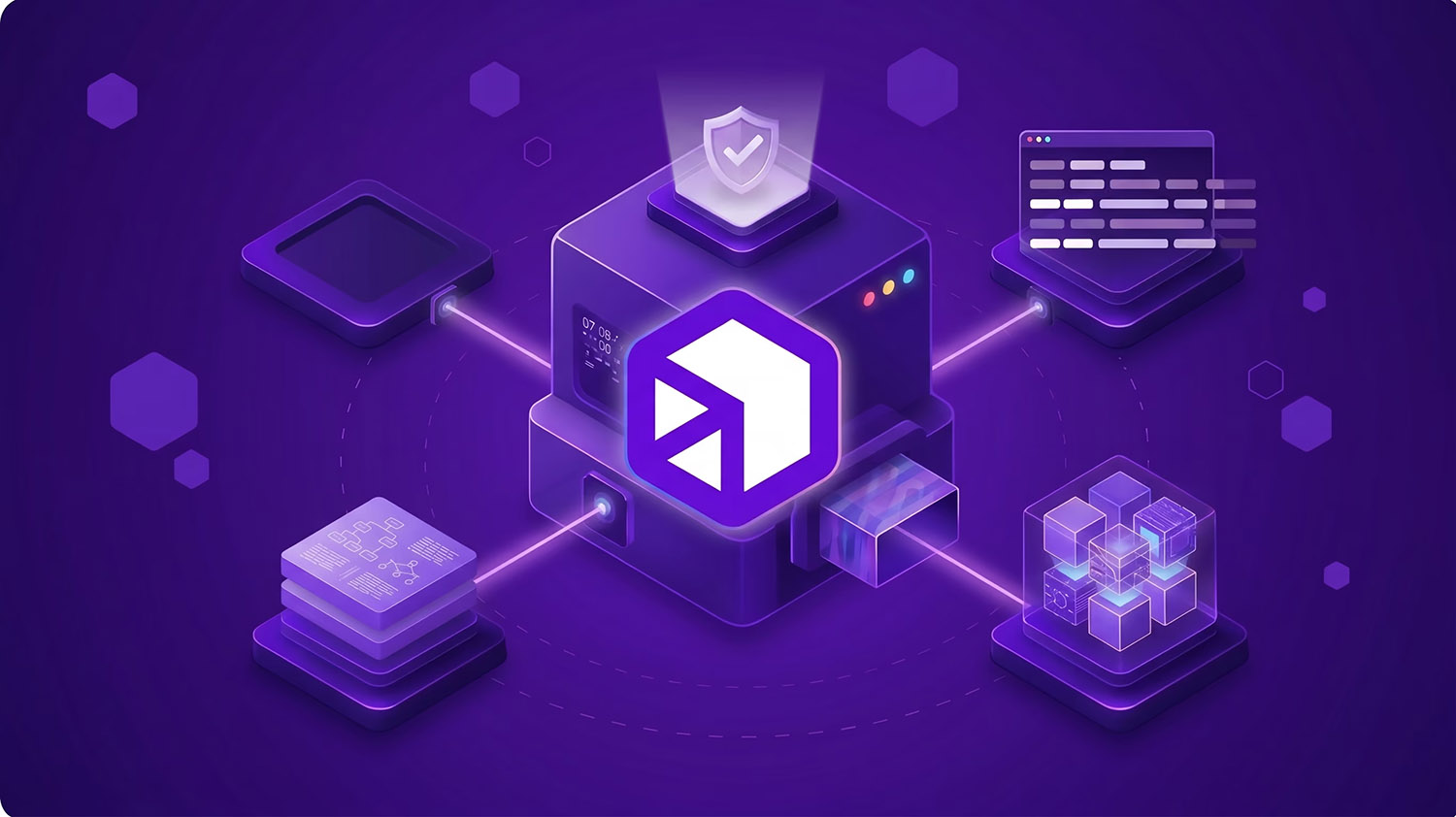
We call this approach “deterministic plus.” It leaves deterministic workflows deterministic, but adds an agentic layer that interprets what those workflows surface.
How financial services can use deterministic-plus
In financial services, a deterministic approach is often a legal requirement, and the regimes that mandate explainability aren't going away.
So the question isn't whether deterministic workflows will go away. They won’t. The question is where AI can add value that deterministic workflows alone structurally cannot: automating work that's unstructured, context-dynamic, and requires reasoning.
The deterministic-plus pattern works like this:
- The deterministic layer moves data, enforces routing rules, validates inputs, transforms formats, and writes to systems of record. Everything it touches is auditable and mechanically reliable.
- The “plus” portion comes from agentic workflows that run alongside or downstream, operating on information surfaced by deterministic processes. It might highlight, for instance, that the bank has processed more payments than usual on sports-related purchases during the World Cup.
Our customers often find “deterministic-plus” opportunities when they look at the manual work that surrounds integrations and automations. Where is data handed to a person who then does analysis? What could AI do before the data is handed off to make that analysis more effective?
Exception handling on overnight batch processing
While real-time settlement systems now handle most institutional transactions, core banking overnight batch processes still handle a small portion of the load. These processes require deterministic operations. Accounting reconciliation, transaction aggregation, and end-of-day settlement need to behave identically every time, with complete traceability.
When a batch run detects an accounting discrepancy, the deterministic workflow moves the imbalance to a suspense account. It also aggregates all relevant transaction logs, API payloads, and system-of-record states across whatever legacy systems are involved.
Then it waits for senior operations staff to log in. Diagnosing the root cause of a batch failure can consume 40-60% of total mean time to resolution , and banking batch failures carry real liquidity risk for every hour they remain unresolved.
Deterministic plus solution: AI can’t help resolve discrepancies, but it can accelerate the diagnosis. It can reason across the aggregated forensic data to suggest a probable root cause and a recommended remediation. By 6 a.m., when senior operations staff log in, the exception ticket isn't blank. It contains a probable diagnosis (a 1-hour cut-off window mismatch with an external vendor network, for example), the relevant transaction IDs, and a suggested action (a ledger reversal, a force-posting, an escalation path).
Value: The AI does the overnight reading. It proposes a likely root cause and potential solution. The team decides what to do with it. The AI won’t be right every time (that’s why humans stay involved), but it will be right most of the time. When it is, it will cut remediation time by half.
Data mesh catalogue support
Financial services firms increasingly use data meshes to facilitate analytics. This approach distributes data ownership across domain teams rather than concentrating it in the IT department. Each team publishes data for the rest of the organization to consume and analyze.
Data catalog projects often fail due to lack of adoption and engagement. Many failures trace to a lack of up-to-date documentation that non-technical users can understand. Without proper guides, analysts can’t find what they’re looking for and revert to siloed spreadsheets.
Deterministic plus solution: An agentic workflow takes a sample of data from the deterministic data pipelines, along with any existing documentation, to produce an up-to-date guide, including any major changes.
Value: The catalog stays current without a documentation backlog. Non-technical teams can find, understand, and trust the data products they need. The adoption gap narrows, and the firm’s investment in the mesh yields a return.
Complaint intelligence
Every night, Digibee banking customers sync branch data back to the home office—including a rolling record of customer complaints. Simple aggregation of this information can show complaint volume and category breakdowns, but can’t get deeper than that.
Deterministic plus solution:
Layer in an agentic workflow that:
- Proposes explanations for trends. For example, an uptick in complaints about online banking may be linked to a brief (and resolved) cloud provider outage.
- Spots new trends the bank wasn’t watching for. A cluster of scam reports can surface an emerging fraud pattern days or weeks before it would have shown up in a formal review cycle.
The agent runs downstream against the complaint data on a rolling basis—summarizing substance across batches, identifying geographic or product-line concentration, and layering current volumes against historical baselines.
Value: The core banking process stays auditable, but the signal that once took weeks of manual analysis can appear in hours.
What these cases have in common
Each of these use cases centers on a core process that leaves no room for probabilistic output. None of the proposed solutions touch those core processes. Instead, they ask AI to synthesize inputs that don't reduce to a formula. That's where LLMs perform reliably. It's also work that has historically either gone undone or consumed senior human capacity that belonged elsewhere.
natural candidates for a complementary AI workflow, talk to a member of the Digibee team.