An integration platform is the foundation that connects systems, applications, data, and processes so that operations function more smoothly, securely, and predictably. Instead of keeping information isolated between ERP, CRM, e-commerce, APIs, databases, and legacy systems, the company begins to operate with integrated workflows, less rework, and greater scalability. The provided text addresses precisely this problem of fragmentation between tools and shows how integration has become an operational and strategic necessity.
Why has an integration platform become so important?
The reality for businesses has changed. Today, almost no relevant operation depends on a single system. It's more common to work with cloud applications, specialized platforms for each area, databases, APIs, digital tools, and legacy structures that need to operate together. When these elements don't connect in a structured way, the company accumulates rework, duplicate data, operational slowdowns, and low visibility into what's really happening between departments.
It is in this context that the integration platform gains importance. It doesn't exist merely to make systems "talk" to each other. It exists to organize this conversation within a more reliable architecture, capable of supporting data exchange, process automation, and technological evolution with greater maturity.
The core content highlights precisely this scenario by presenting integration as a response to data dispersion and the need to make operations more coordinated, productive, and prepared for growth.
What is an integration platform in practice?
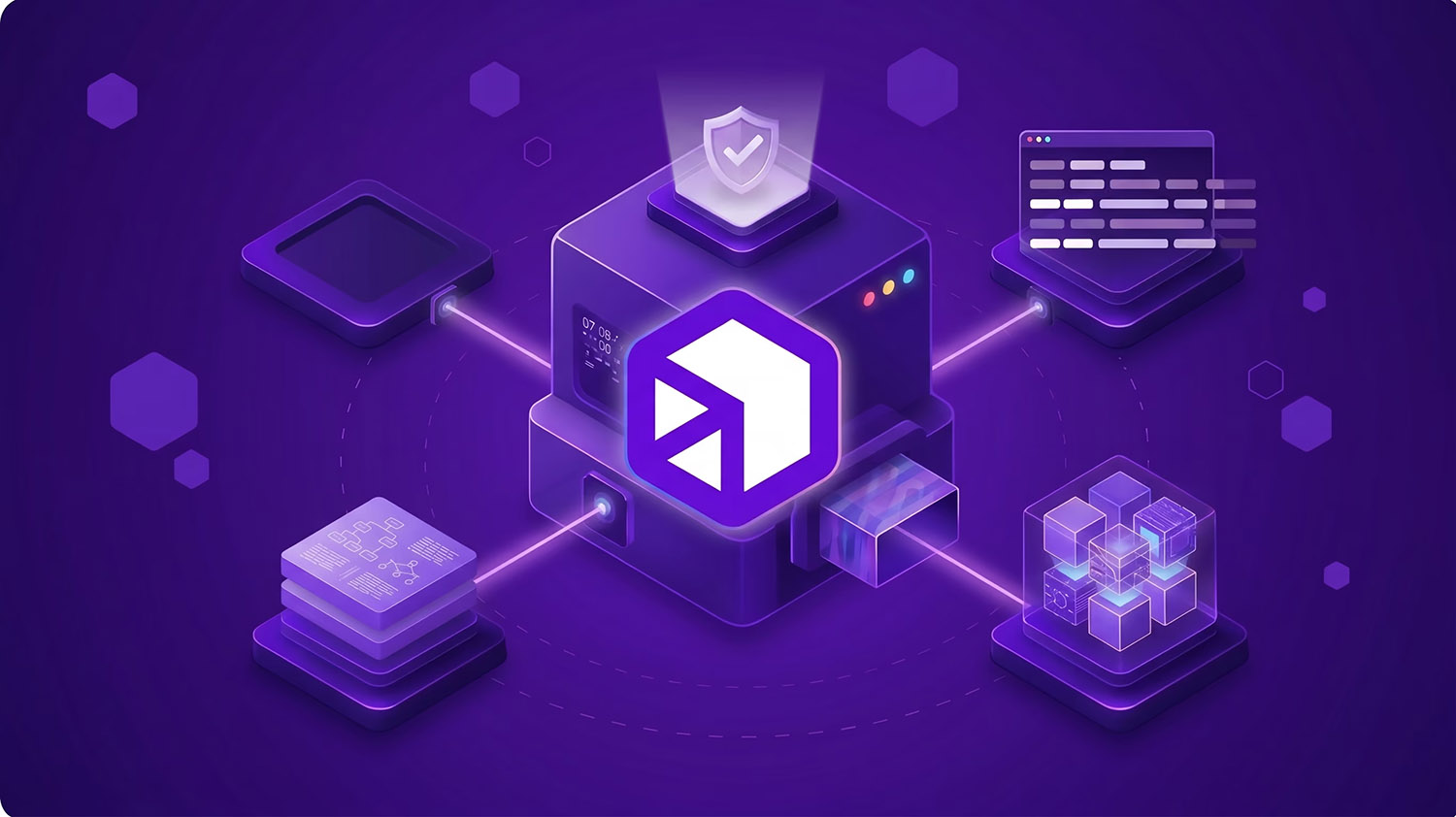
An integration platform is a technology designed to connect systems, applications, databases, and services that need to share information automatically and securely. In practice, it acts as an intermediary layer that receives data from a source, applies rules, transforms formats when necessary, and sends that content to the correct destination.
This changes how the operation functions. Instead of teams relying on parallel spreadsheets, duplicate entries, or manual transfers between departments, the company starts operating with more synchronized and consistent workflows. This benefit applies to both simple processes and more complex corporate scenarios.
The source text describes this role by using the idea of a translator between systems, and also mentions APIs, connectors, and visual flows as means of enabling integration between different tools.
How does an integration platform work?
The operation of an integration platform is based on three central elements. The first is connectivity, which allows the integration of APIs, business applications, databases, legacy systems, and cloud platforms. The second is data transformation, responsible for adapting formats, fields, and structures so that different systems correctly interpret the same information. The third is orchestration, which defines the logic of the flows and the sequence of operational steps.
Furthermore, more mature platforms offer monitoring, logs, security, access control, and observability. This is essential because enterprise integration cannot be treated merely as a technical exchange of data. It needs to be governable, secure, and production-ready.
The source material also points out that some platforms work with visual interfaces and ready-made connectors, while others are more geared towards robust scenarios, such as middleware and ESB, which reinforces the variety of possible approaches depending on the level of complexity of the architecture.
Important points
- An integration platform connects systems, applications, data, and processes.
- It reduces information silos and improves operational fluidity.
- Integration helps reduce rework, manual errors, and poor visibility.
- The platform's value lies in connectivity, transformation, orchestration, and governance.
- APIs, connectors, middleware, ESB, and iPaaS can all be used to create different strategies.
- In corporate environments, integration needs to be secure, observable, and scalable.
What benefits does an integration platform deliver?
The benefits begin with a reduction in rework. When systems communicate correctly, teams no longer have to repeat entries, manually reconcile information, and correct inconsistencies between departments. This improves productivity and frees up time for more strategic activities.
Another important benefit is the quality of information. With data circulating in a more structured way, reports, indicators, and decisions better reflect the reality of the operation. This directly impacts management, customer service, sales, finance, and planning.
There is also a significant architectural benefit. An integration platform allows the company to grow without multiplying technical weaknesses. The base text reinforces this view by highlighting scalability, error reduction, process automation, and competitive advantage as direct consequences of a well-implemented integration.
When does a company need an integration platform?
The need becomes clear when operations begin to suffer from fragmentation. The source text cites quite objective signs, such as duplicate information, teams entering the same data more than once, difficulty in consolidating reports, time-consuming manual processes, and an increasing number of systems within the company.
These symptoms show that integration is no longer an optional gain. It has become a structural response to reduce friction and prepare the operation for more predictable growth. In companies that operate with multiple systems, areas, and channels, this role becomes even more important.
In practice, the integration platform becomes the foundation that connects the present operation to the future architecture, without requiring constant improvisation for each new business need.
Read more
What is an integration platform?
It is a technology that connects systems, applications, data, and processes so that they can exchange information in a structured and secure way.
What is the main function of an integration platform?
Its main function is to organize communication between different systems, reducing rework and increasing operational consistency.
Are integration and automation platforms the same thing?
No. Integration connects systems. Automation uses this connection to execute actions based on defined rules.
Is it possible to integrate legacy systems with modern applications?
Yes. An integration platform allows you to create that bridge between legacy systems, cloud, APIs, and new applications.
Does every company need an integration platform?
Not every company needs it to the same extent, but organizations with multiple systems tend to gain significantly in efficiency, governance, and scale.
What should you consider when choosing an integration platform?
It is important to evaluate connectivity, security, governance, scalability, operational visibility, and adherence to the company's architecture.
Why the integration platform is a strategic topic
Talking about integration platforms means talking about the foundation that supports the digital operations of companies. In an increasingly distributed environment, with cloud systems, enterprise applications, APIs, and legacy systems coexisting, integration has ceased to be a secondary technical need. It has come to directly influence operational efficiency, data quality, speed of execution, governance, and innovation capacity.
At Digibee, we understand integration platforms as a strategic capability, not just a technical resource. Integration needs to be observable, secure, reusable, and prepared for complex enterprise environments. This is the path to reducing complexity without hindering innovation, modernizing operations without losing control, and connecting critical systems with architectural responsibility.
The base text illustrates this point by associating integration with automation, productivity, scalability, and competitive advantage. However, in an enterprise context, this value needs to go beyond immediate efficiency. It needs to support an architecture capable of growing consistently, connecting cloud, APIs, and legacy systems with governance, and allowing the company to evolve without turning each new integration into a difficult-to-maintain exception.
Therefore, a well-defined integration platform helps transform technology into a more coordinated and less fragmented asset. This strengthens current operations and prepares the company for future initiatives with much greater clarity, scale, and maturity.