Top Findings: Digibee’s 2023 State of Enterprise Integration Report – Implementation Time
Digibee examines one of the top findings in our second annual State of Enterprise Integration report, as ranked by your peers.

PUBLISHED
May 30, 2023

Digibee examines one of the top findings in our second annual State of Enterprise Integration report, as ranked by your peers.
In 2023, Digibee's held its second annual event Company State Integration Survey, reaching 1,000 CTOs, CIOs, system architects, and web developers across North America.
In this series of blog posts, we examine one of the report’s key findings, as ranked by its peers. Time to implementation stood out as one of the biggest challenges when embarking on an IT digital transformation strategy. Many respondents said that while their goal was to accelerate digital transformation, implementing integration took significantly longer and was more complicated than expected.
Today’s business leaders understand that enterprise integration has become an industry standard. They know that adopting innovative technologies that accelerate digital transformation across the enterprise is essential to ensure future success. That’s why the majority of respondents (71%) plan to actively adopt, supplement, or replace their integration technology in 2023 as part of their IT digital transformation strategy.
As business leaders begin to pursue their systems integration project plan on how to accelerate digital transformation, many organizations find themselves bogged down during the implementation process.
According to the Digibee Enterprise Status Integration Report 2023, 100% of respondents who had not yet started implementing a standard integration estimated that an implementation would take one to three months to complete.
However, 74% of respondents who have already started their digital transformation strategy roadmap found that the average time to implement a standard integration is between three and nine months – up to three times longer than expected.
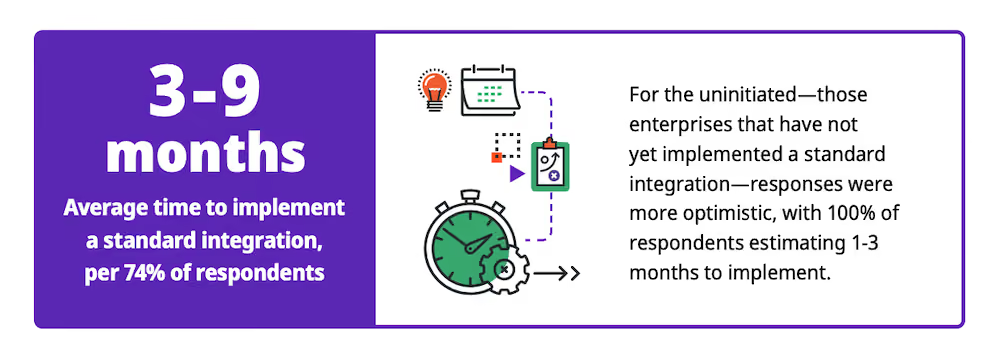
How long does it take your team to implement a standard integration?
The high price we pay for delays
Even the best-laid digital transformation plans can be derailed by many factors that lead to delays in integration implementation time. Delays can be caused by complex legacy systems, internal process limitations, IT backlogs, inadequate resources, and other unexpected factors, but the Digibee report states that the biggest impediment to faster implementation is system downtime.
Downtime often occurs during integration implementation when organizations currently rely on outdated technology, whether on-premises, complex internal systems, or legacy systems. Organizations with the most challenging environments to convert often experience the longest integration delays.
Delaying a software migration project plan can have costly consequences. Unexpected delays, such as downtime, can quickly lead to costly disruptions with widespread effects that slow the acceleration of digital transformation.
Information Technology Intelligence Consulting’s report, The Hourly Cost of Downtime, states that “The cost of downtime has increased significantly for 90% of SMBs and large enterprises, with 44% reporting that a single hour of downtime could cost them more than $1 million.”
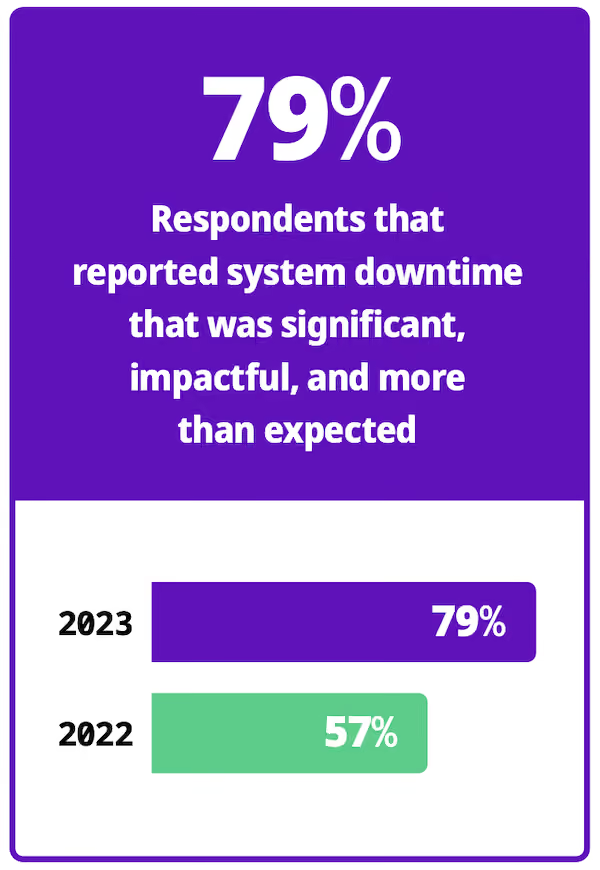
In Digibee 2023 Report, the majority (79%) of respondents said that system downtime during integration had a significant impact on their business and was a much larger disruption than expected. The number of respondents who experienced unexpected downtime was significantly higher than last year’s report, which was 57%.
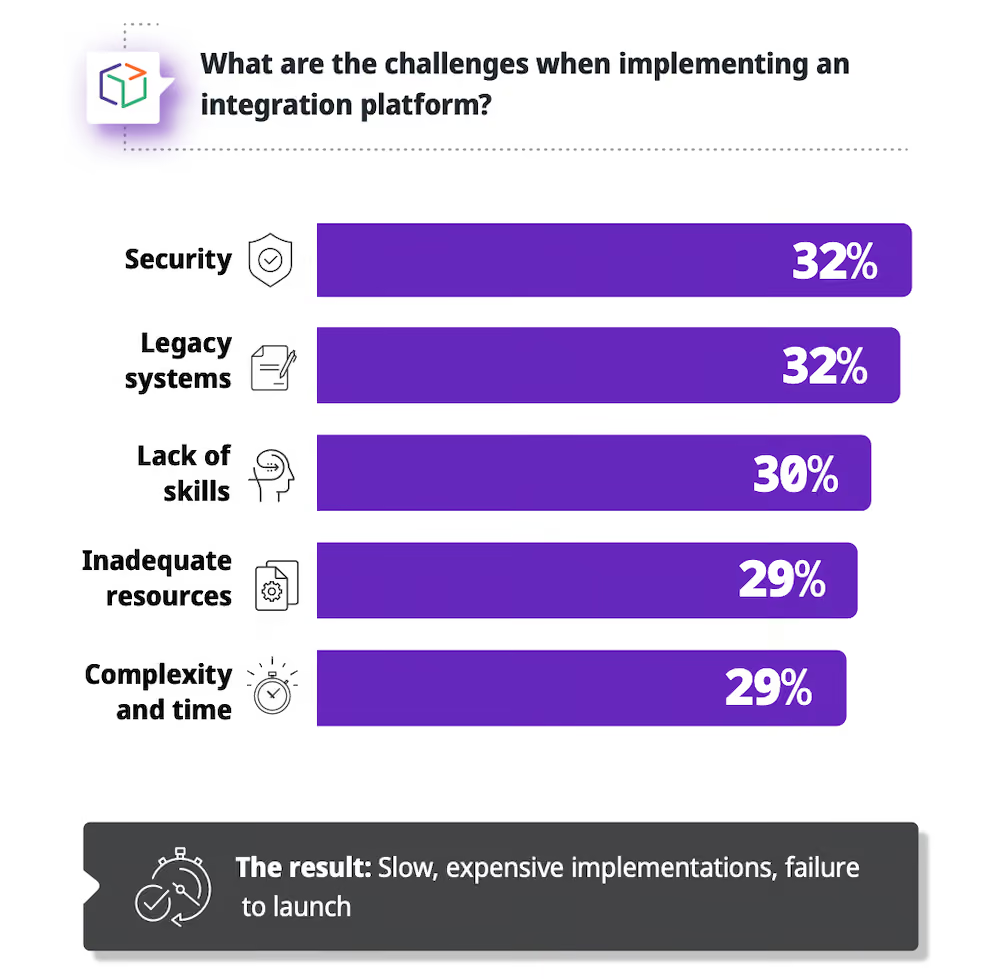
While more than three-quarters of respondents have dealt with unplanned downtime while implementing their system integration project plan, downtime isn’t the only factor impeding software migration project plans, and cost isn’t always the most important factor. In fact, while budget topped the list of integration challenges in last year’s Digibee report, it wasn’t even in the top five challenges for 2023.
Other challenges facing business leaders this year include security issues, legacy systems, skills shortages and inadequate resources within organizations, as well as the increasing complexity and time required to implement and maintain system integrations. This often results in additional investments in maintenance and training. All of these issues can lead to slower and more expensive implementations that can reduce the return on investment (ROI), ultimately impacting the overall ROI of digital transformation.
With so many challenges to overcome, it’s no surprise that more than 70% of leaders surveyed are actively planning to adopt, supplement or replace their integration technology in 2023.
On paper, a digital transformation plan may seem straightforward, but in reality, all the variables involved in a typical migration project plan can make implementation time much longer and more complicated than expected. Ineffective integrations impede profitability, so business leaders must have a solid IT digital transformation strategy and systems integration project plan in place for the implementation process.
The most effective way to ensure successful acceleration of digital transformation is to leverage modern technology with an enterprise integration platform as a service (iPaaS) environment. An iPaaS with drag-and-drop interfaces can make implementing a software integration project plan faster and easier.
Digibee provides a fast and streamlined IT integration experience. Digibee’s easy-to-use iPaaS is a cloud-native, enterprise-ready integration platform that accelerates time to value, reduces risk, and helps reduce IT costs. For example, Digibee integrated a secure iPaaS e-commerce platform for a global footwear retailer Payless shoes in over 400 stores across 15 countries in less than 30 days. How’s that for fast and easy? The iPaaS system easily handles seasonal peaks for the busy retailer and provides better efficiency, transparency and security across the retail enterprise, despite each country having different tax and legal requirements.
Accelerating digital transformation can be done quickly and successfully, provided you take the right approach with an effective digital transformation strategy roadmap supported by iPaaS technology.
Get the full story on what’s changed and how your peers are mobilizing enterprise integration in 2023. Download the Digibee 2023 State of Enterprise Integration Report for Free today for all research results and analysis.
Rodrigo cofounded Digibee based on the principles of simplicity, agility and strong human connections — with the goal of freeing less technically savvy customers from their reliance on developers for more rapid, cost-effective digital transformations. After receiving a Bachelor in Computer Science and an MBA, Rodrigo went on to senior roles at CA Technologies and Zup Innovation.
RECOMMENDED POSTS

Recognition accompanies the platform's growth in a market that increasingly demands governance, orchestration, and connectivity between systems.


The move strengthens Digibee’s position in the U.S. market and accelerates its strategy to deliver intelligent, AI-driven integrations at scale.

Agent building that meets the demands of enterprise integration teams—no Python required, no siloed AI stack needed.

Developers now prompt AI tools to build for them. Software companies have built MCP servers that let you work on their platforms straight from an AI chat interface. There’s a better way: starting from a specification.
Is the source of truth held in the code, or in the specification? Why "vibe coding" falls short for enterprise infrastructure and why durable specifications are essential.

An AI engineer explains some of what he had to do to build the Digibee Digital Worker.