Why Claude Code can’t handle integrations

The speed of coding agents is impressive, but enterprise integration depends on far more than code generation.

junho 24, 2026

Every team at Digibee uses Claude Code. We want to start there, because what follows is not a hot take from people who haven’t tried the tools.

Coding agents have changed how our engineers work, how fast we prototype, how much cognitive overhead we shed on routine tasks. If your teams aren’t using one, you’re leaving real productivity on the table.

Using coding agents means diligently checking their work. In doing so, we have seen their limitations.

A big one? Integration. 

The success of coding agents in greenfield development has created an assumption that they can be pointed at any software problem and deliver results. Integration teams are being handed AI tools and told to move fast. 

However, enterprise integration isn’t a greenfield challenge. It’s a completely different category of work, with completely different failure modes that coding agents weren’t designed for.

We spent a lot of time understanding generic coding agents’ limitations on integration work, and engineering solutions to those shortcomings. Here’s what we’ve learned.

What integration work coding agents are actually good at

General coding agents can handle integrations well under a narrow set of conditions: 

  • The systems involved are well-documented.
  • The task is one-time rather than recurring.
  • Failure is low-stakes and recoverable.
  • Nothing in production is at risk during testing.

A one-time migration from a REST API to a CSV? Great. A quick script to pull data from a public endpoint? Perfect. A throwaway ETL task with no downstream dependencies? Go for it. 

The problems start the moment the integration faces more complex conditions. In enterprise integration work, they almost always do. 

Enterprises need:

  • Integrations that run reliably on a schedule or in response to real-time triggers. 
  • Workflows with built-in retry logic and failure recovery. 
  • Audit trails showing what moved, when, and why. 
  • Credential management that doesn’t sprawl across a dozen bespoke configurations.
  • Monitoring that catches silent failures before a business process breaks. 
  • Integrations that can be maintained, transferred, and understood by someone other than the person who built them.

Coding agents don’t produce any of this. They produce code. Code that often works brilliantly—but code that has to live somewhere, be secured somehow, and be maintained by someone. 

In enterprise integration, falling short creates very expensive problems.

Why the gap is structural, not incidental

It would be easy to frame this as a maturity argument. Coding agents are new. They’ll get better. 

But generalist coding agents’ integration limitations come from structural gaps against what enterprise integration requires.

Integration thrives on accumulated, encoded knowledge embedded in pre-built connectors crafted to account for how NetSuite sequences operations, how SAP handles idempotency, and how Salesforce structures its data model. A coding agent has to reason about each of those nuances from scratch, every time. That’s where subtle, production-only bugs are born.

Here are the three places where this mismatch shows up most clearly.

Coding agents figure out every system from scratch, every time

Enterprise integration targets are often poorly documented. That’s the reality of legacy systems, accumulated data contracts, and decades of organizational complexity. Most of the behavior that matters only surfaces under load, and none of it is in the spec.

Even when documentation does exist, a coding agent might ignore it. Researchers have observed that LLMs can lose track of content in the middle of their context window. They call this the “lost in the middle” effect. When this happens, the model substitutes its underlying training data. The more obscure the package or API, the more likely a coding agent is to generate code that fails against it.

This problem doesn’t automatically improve over time. Agents don’t accumulate understanding. They must parse and interpret complex sequencing logic and non-obvious idempotency rules fresh each time. In addition, their always-bespoke code can be hard to read, hard to debug, and nearly impossible to govern consistently across an enterprise estate.

The result is a category of bugs that are hard to find. They don’t break loudly on deployment. They silently corrupt records or double-write transactions in edge cases that don’t appear until a system is under real load. 

And the CIO only learns about them six months later.

Coding agents build code; integrations require more than that

Integrations require more than code. Someone has to provision infrastructure, manage uptime, handle scaling, implement retry logic, build failure recovery, and create visibility into what happens in production.

You could vibe-code your way around retry logic, logging, and other gaps individually. But now you’re building an integration plus five infrastructure components, each with its own maintenance burden.

Coding agents are also optimized to iterate fast, not to fail safely. An integration failing in production means payments aren’t processed. Freight bids aren’t made. Orders don’t ship. A bad write has revenue, reputational, and regulatory consequences. An agent that generates business logic without logging, alerting, or circuit breakers gives you half a solution—the easy half.

And then there’s the maintenance problem. APIs change. Tokens expire. Systems update. An agent has no relationship with what it built and no memory of why decisions were made. The integration lives in the head of whoever prompted it. When that person leaves (even for vacation), so does the rationale behind every design choice.

Coding agents don’t own what they build

Technical debt is visible. Governance debt isn’t—until it’s a breach, an audit finding, or an employee’s last day.

One underappreciated dimension of that liability is control. Generalist coding agents generate code directly from a prompt and supplied materials. There’s no intermediate artifact—no specification, no mapping document, no structured record of requirements, edge cases, or error behavior.

That’s a control gap. And it impacts any team that needs to understand, audit, or change an integration after the fact.

API keys, OAuth tokens, and service credentials need to be stored, scoped, and rotated correctly. Generated code has no opinion on this and no ownership of it. Every custom integration is a new artifact to secure, a new attack surface, and a new dependency with no ownership model. 

Any integration that moves data between systems needs a reliable record of what moved, when, and why. You can’t deny a loan application without clear rationale. When something breaks, or a business decision gets questioned, that record is how you understand what your system actually did. Generated code doesn’t produce it.

Coding agents operating in credential-rich environments (which is every enterprise integration environment) have access to secrets they were never designed to be trusted with. That’s not an argument against using coding agents. But using them securely in these environments means integrating credential management, which is another piece of infrastructure to maintain.

Scale makes this worse. One coding-agent integration is manageable. A hundred of them—each with its own retry semantics, its own error handling, its own credential assumptions—is a hundred codebases to secure, update, and maintain. The cost compounds.

What skills fix, and what they can’t

Across Digibee we use “skills” in Claude Code to accelerate work. A well-crafted skill (with embedded examples, documented edge cases, and validated patterns) elevates an agent’s effectiveness on well-defined tasks.

Applying skills to integration would mean researching how each target system behaves beyond its documentation—edge cases, rate limits, version-specific quirks. This isn’t one-ff work. Enterprise systems change over time, which would require maintaining and evolving the skill alongside them. The resulting instructions would equip an agent to produce more reliable code for that system—though not 100%.

LLMs behave probabilistically. A well-crafted skill improves the odds, but the code it produces can pass tests and still fail in production—perhaps silently. Idempotency violations, for example, don’t throw errors. Double-writes accumulate until reconciliation breaks several days later.

The AI-native platform that we’ve built doesn’t eliminate the risk of an LLM getting something wrong, but it changes where and how it surfaces. The agent generates integration logic against deterministic connectors. A wrong path means an inappropriate architecture (something an integration expert can easily spot), not a quietly-broken interaction with core infrastructure (something they might not).

A skill can document how to respond to a failure, but it can’t notice one. The agent doesn’t run alongside the integration. A platform does: monitoring for silent failures, alerting before reconciliation breaks, and keeping the operational layer running between builds. 

Our team also keeps connectors current. When SAP changes how it handles idempotency, or Workday adjusts its approach to effective-date records, it’s someone’s job at Digibee to know those changes are coming. They update the code base, with versioning and release notes that document the gap. 

A skill is a knowledge layer. What integration also requires—runtime monitoring, failure detection, and connector maintenance—is a different category of work, and a different category of tool.

We’ve harnessed AI to reimagine modern integration

Our engineers saw these gaps, and they wanted to fix them. After all, enterprise AI initiatives keep adding work to the integration teams’ backlog. Why shouldn’t the integration team benefit from AI?

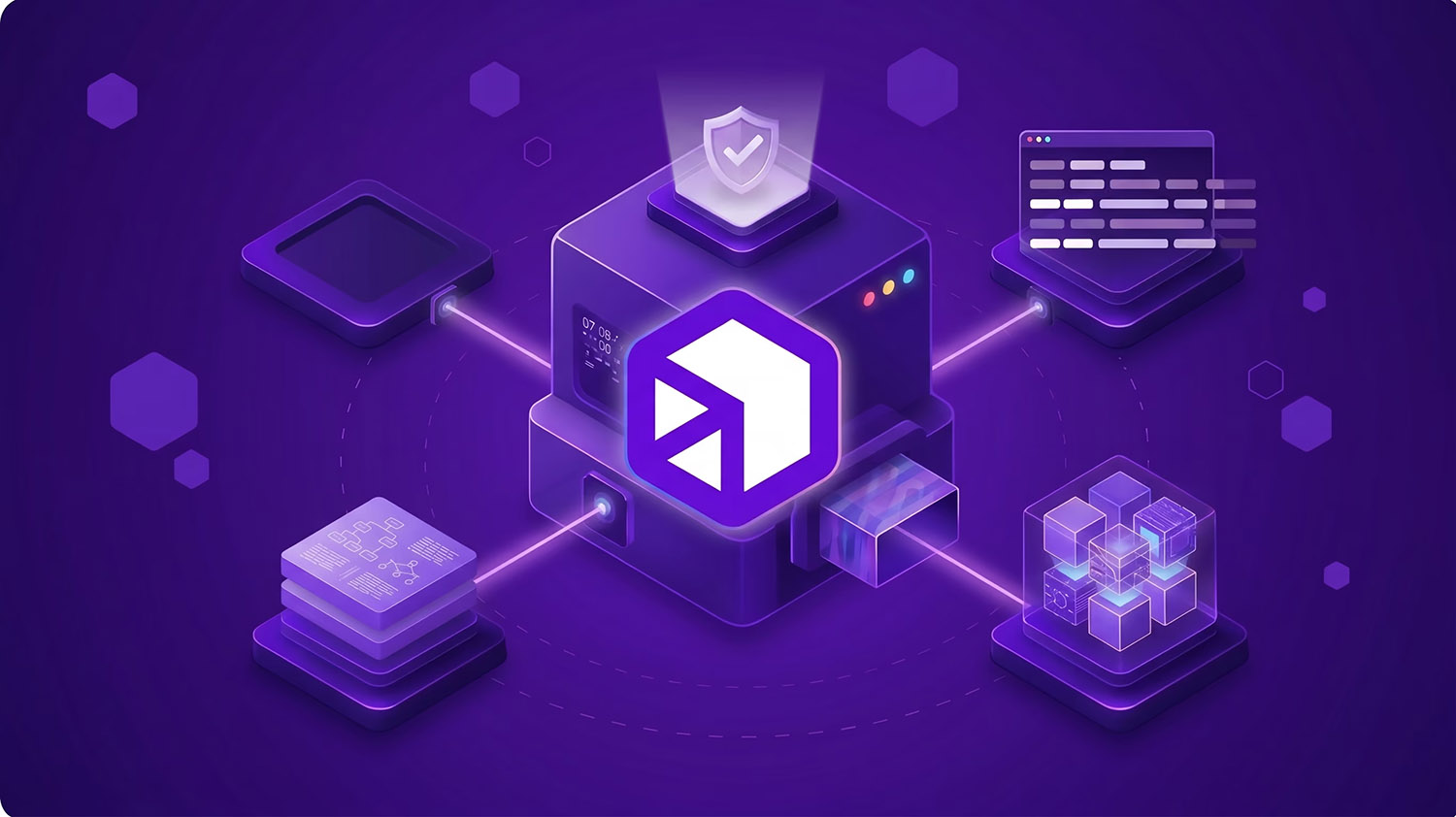
We applied years of enterprise integration experience to harness LLMs for what integration actually requires. The agent still authors the integration logic (generating mappings and business flows from a prompt, at speed), but it generates against validated, deterministic connectors. Once built, the workflow runs on managed infrastructure that provides retry, alerting, and credential rotation by construction, and produces a structured artifact that serves as the audit trail. 

We kept this entire interaction within our ecosystem. We could have built MCPs for use with external coding agents, but we wanted to give our users a consistent, opinionated experience. Our version of the AI-native interface sees the user and the AI co-develop a specification document that works to understand the workflow’s present and future requirements before any build begins.

That’s what ‘AI-native’ means in practice: the agent keeps what makes it fast; the platform handles everything required to make the integration reliable.

The bottom line

We love coding agents. This isn’t an argument to stop using them. It’s an argument for clarity on their limitations in one specific application: integration.

Coding agents will consistently fall short on recurring, high-stakes, enterprise-scale integration. Not because the technology isn’t impressive, but because the problem doesn’t fit the tool. 

Telling your integration teams to move fast with AI, without accounting for the structural gap, is setting them up to build something that looks like it works. Until it doesn’t.

We built something different. If you’re responsible for integration infrastructure and you want to see what an AI-native approach looks like in practice, we’d like to show you.

Get early access to the first AI-native integration platform.

Blogs Recentes


Integração para diminuir glosas no setor de saúde

Bebendo nosso próprio champanhe: usando a Digibee para minerar o Gong

Como construí pipelines agenticos na Digibee para minerar nossas transcrições do Gong. O que encontrei e o que faria diferente.

Saiba mais
estoque crítico integração em saúde

Como quase tudo em tecnologia, AI não é uma questão de tudo ou nada

Reconhecimento acompanha o crescimento da plataforma em um mercado que exige cada vez mais governança, orquestração e conexão entre sistemas.

Saiba mais

Digibee é reconhecida como Honorable Mention no Magic Quadrant™ da Gartner® para iPaaS

Reconhecimento acompanha o crescimento da plataforma em um mercado que exige cada vez mais governança, orquestração e conexão entre sistemas.

Saiba mais

Explore mais do Digibee


Por que escolher Digibee

A maioria das plataformas de integração exige conhecimentos especializadas e implementações longas e caras. O construtor de integrações low-code da Digibee, com gerenciamento e monitoramento inclusos e componentes reutilizáveis, ​​acelera a inovação e a agilidade em seus workflows.

Preços Digibee

Pague apenas pelo que usar com a precificação baseada no consumo. A Digibee oferece suporte e serviços especializados, eliminando o risco e o estresse dos projetos de integração empresarial.

Estudos de caso de integração

See how Digibee’s iPaaS surpasses our competition through accelerated, efficient, secure integrations. Our customers experience digital transformation up to 70% faster with less cost.

X